
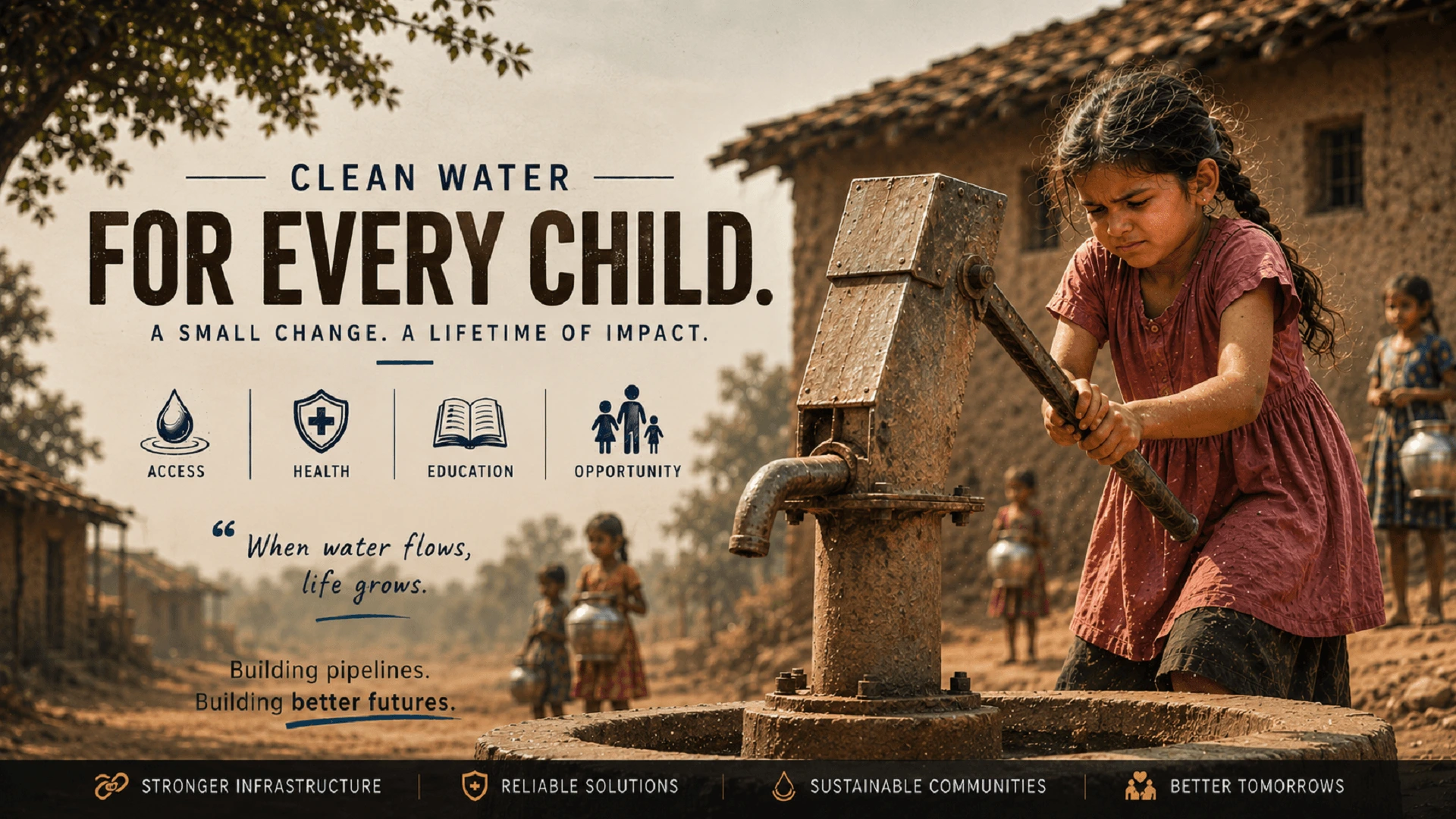
The Core Idea
This concept is built around a simple but critical reality: Access to clean water directly shapes human life quality. The ad film was designed not as a product showcase, but as a reflection of how infrastructure quietly transforms entire communities.
Why This Story Focuses on Rural Life
Rural environments were chosen because they represent the most direct and visible impact of water scarcity. We focused on the daily routines that define these spaces:
- The long, often arduous walks for water collection.
- The inherent instability of relying on handpumps or unsafe sources.
- The disruption of school attendance due to household labor.
- The quiet, chronic physical strain on families.
These realities form the necessary emotional foundation of the story.
Observational Study of Behavior
To ensure authenticity, the visual direction was influenced by real-world observation of rural water usage patterns. Key behavioral insights included:
- How children are forced to prioritize water collection over education.
- How households structure their entire day around water availability.
- The physical toll that manifests as emotional fatigue.
- The way community social fabric is woven around shared water sources.
The Narrative Arc
The ad film follows a clear transformation arc to illustrate the impact of infrastructure:
1. Scarcity
Struggle, repetition, heavy physical effort, and time loss.
2. Dependence
The constant reliance on limited or unsafe water sources.
3. Intervention
The introduction and integration of pipeline infrastructure.
4. Transformation
Restored access, reduced daily burden, and improved life quality.
Children as the Central Focus
Children represent both vulnerability and future potential. Their inclusion highlights the hidden cost of scarcity—the loss of time, the physical burden at a formative age, and the critical importance of modern infrastructure for development. Their transformation symbolizes long-term societal change.
Visual Language Philosophy
We used cinematic contrast to communicate change without excessive exposition. The visual shift represents transformation:
- Dry environments: Harsh, grounded tones.
- Water scarcity: Muted, heavy visual rhythm.
- Pipeline arrival: Structured, stable visual framing.
- Post-installation: A lighter, hopeful emotional tone.
Realism Over Exaggeration
To maintain emotional trust, the ad film avoids the overly dramatized tropes of aid-based advertising. Instead, it focuses on:
- Natural environmental conditions.
- Realistic human behavior and reactions.
- Practical daily routines.
- An unembellished, honest visual tone.
AI-Assisted Creative Development Note
This concept was developed using AI-assisted cinematic production workflows combined with observational rural research, narrative structuring, and realism-focused visual planning. The technology acts as a tool to support meaningful storytelling for infrastructure communication, not as a replacement for human observation.
This ad film is not about pipes or systems.
It is about the silent difference infrastructure makes in everyday human life.
Clean water is not just development; it is dignity restored.