
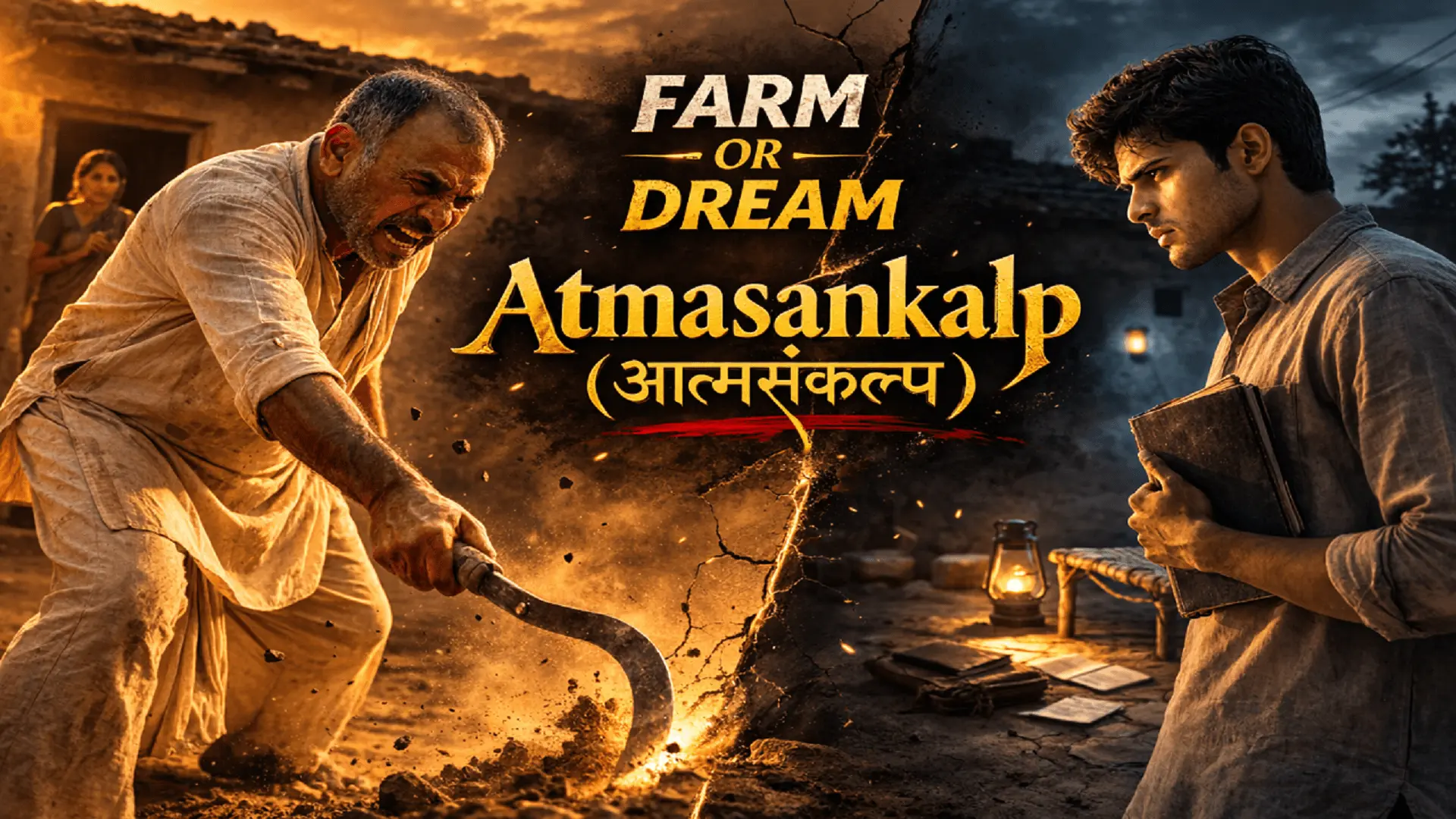
The Emotional Foundation Behind The Film Atmasankalp
This story was never intended to be only about becoming a DSP officer. At its emotional core, the film explores something much deeper: the invisible emotional weight carried by students and families chasing government job dreams across rural India.
Behind every successful result often exists:
- Exhaustion
- Financial pressure
- Self-doubt
- Family sacrifice
- Social humiliation
- Silent discipline
- Emotional isolation
That emotional reality became the foundation of the film. The story was designed not around “achievement,” but around endurance.
Why The Rural Atmosphere Was Important
A major creative decision behind the film was grounding the story inside emotionally believable rural environments rather than idealized cinematic villages. Particular attention was given to:
- Unfinished walls
- Old wooden furniture
- Dusty morning light
- Quiet household routines
- Limited resources
- Rural clothing texture
- Naturally worn environments
The intention was to create spaces that emotionally feel lived-in rather than visually decorated. This realism helps the audience emotionally connect with the struggle instead of simply observing it.
Observing Real Aspirational Student Life
A significant part of the creative development involved studying how competitive exam preparation emotionally affects students and families in smaller towns and villages. Instead of presenting motivation as loud or cinematic, the film explored aspiration through quiet persistence, documenting key markers such as:
- Late-night study behavior
- Physical exhaustion from long preparation cycles
- Emotional pressure from repeated failure
- How parents silently observe their children’s struggle
- The social fear of “not succeeding”
- Emotional distance created by ambition
- Silent determination hidden beneath fatigue
Understanding Family Psychology Beyond Dialogue
One of the strongest emotional elements in the film is the relationship between Ravi and his parents. The emotional realism was intentionally built through:
- Pauses instead of speeches
- Restrained emotional reactions
- Body language
- Silent disappointment
- Unspoken support
- Subtle parental concern
The mother’s behavior reflects emotional protection. The father’s behavior reflects pressure shaped by hardship and responsibility. Neither character was written as completely “right” or “wrong.” Both represent emotional realities commonly experienced inside financially pressured households.
Studying Social Pressure Inside Small Communities
The villagers in the film were not designed as “villains.” Instead, they represent a social environment where success becomes public discussion, failure becomes public memory, comparison becomes unavoidable, ambition attracts judgment, and gossip influences emotional pressure.
This realism was important because many aspirational students in India experience not only personal struggle, but also continuous social observation. The emotional tension of being watched, questioned, and judged became an important layer of the film’s atmosphere.
Why Silence Became Emotionally Powerful
Many motivational films rely heavily on loud speeches, dramatic background music, exaggerated emotional breakdowns, and unrealistic transformation scenes. This film intentionally avoided that approach, focusing the emotional direction entirely on quieter moments:
- Tired eyes over books
- Unfinished meals beside study tables
- Empty roads
- Bus journeys
- Silent tears
- Restrained family reactions
- Emotional pauses before speaking
These moments create emotional realism because they mirror how struggle often feels in real life: quiet, repetitive, exhausting, and deeply personal.
Researching Real Educational & Rural Environments
During the visual development process, members of the DN Pixel Media creative team spent time observing village life, small-town routines, educational environments, and everyday emotional realities that often remain underrepresented in modern cinematic storytelling. The intention was not to romanticize poverty or struggle, but to preserve emotional familiarity and grounded realism.
Particular focus was given to:
- Early-morning village routines and household structure
- Natural morning lighting patterns and study conditions with limited comfort
- Transportation journeys students undertake for examinations
- Cyber cafés and public result-checking culture
- Village reaction dynamics surrounding success and failure
- How hope and exhaustion coexist inside aspirational rural life
These observations directly influenced lighting choices, house design realism, clothing texture, movement pacing, dialogue restraint, and emotional framing.
The DSP Transformation Was Designed Carefully
The final transformation of Ravi into a DSP officer was intentionally handled with restraint. The goal was not to create a “hero entry” but a genuine emotional payoff. Particular attention was given to:
- Controlled pacing
- Silent reactions
- Restrained pride
- Emotional eye contact
- Subtle body language shifts
- Visual maturity rather than dramatic swagger
The emotional climax belongs not to the uniform itself, but to the years of unseen struggle behind it.
Cinematic Direction & Visual Language
The film’s visual language was structured around emotional progression, allowing a gradual visual evolution to help the audience feel Ravi’s transformation without excessive exposition.
Struggle Phase
- Softer low-light interiors
- Earthy rural tones
- Handheld realism
- Physical exhaustion
- Tighter framing
Journey Phase
- Moving environments
- Wider road imagery
- Transitional light
- Emotional uncertainty
Success Phase
- Cleaner composition
- Stronger posture framing
- Controlled cinematic confidence
- Emotional stillness rather than celebration
Realism Over Motivational Fantasy
A major creative goal behind the film was avoiding unrealistic “overnight success” storytelling. The film intentionally preserves:
- Emotional fatigue
- Social pressure
- Repeated struggle
- Uncertainty
- Delayed reward
This strict adherence to reality reflects the emotional experience of many competitive exam aspirants honestly. The intention was not simply inspiration, but deep, authentic recognition to make viewers feel: “This struggle feels familiar.”
AI-Assisted Creative Development
“Farmer’s Son to DSP Officer” was developed using AI-assisted cinematic production workflows combined with realism-focused visual direction, emotional pacing design, rural atmosphere study, and grounded motivational storytelling principles.
The intention was never to create artificial motivational spectacle. The goal was to explore how modern creative technology can support emotionally human storytelling rooted in real aspirational experiences across India.
Some victories are loud.
But the most meaningful ones are often built quietly:
Through exhaustion, through discipline, through humiliation, through sacrifice, through years nobody sees.
That emotional truth became the foundation behind "Atmasankalp."