
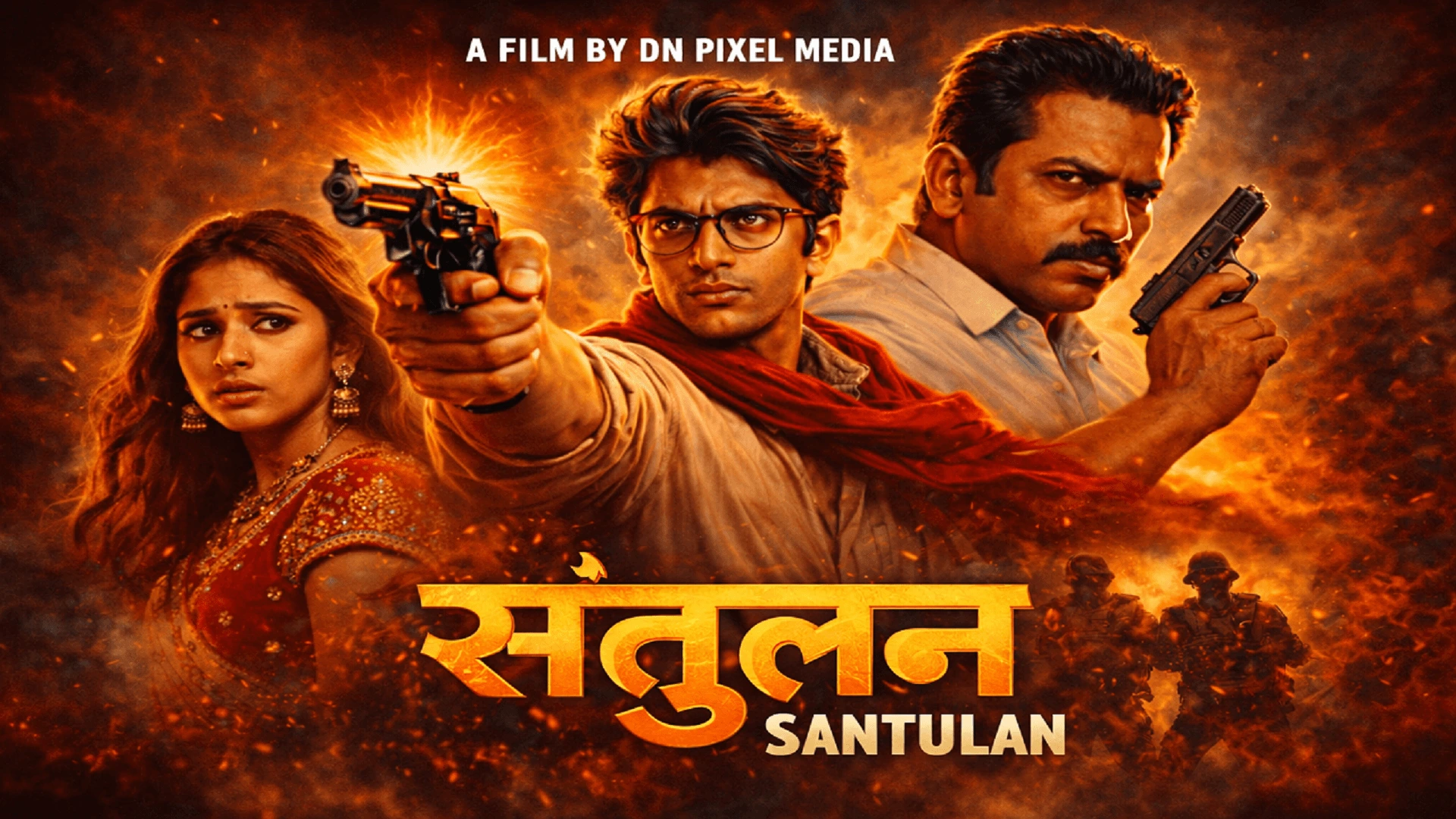
The Emotional Foundation Behind The Film
“Santulan” was never designed as a traditional cyber-thriller focused only on technology, surveillance, or digital crime. At its emotional core, the film explores imbalance.
Imbalance between:
- Wealth and survival
- Power and helplessness
- Privilege and invisibility
- Morality and revenge
- Justice and consequence
The story asks a difficult question: When systems stop feeling fair, how far can a person go before justice slowly transforms into something darker? That emotional tension became the foundation of the film.
Why The Protagonist Was Written Quietly
A major creative decision behind the main character was restraint. Rather than portraying the protagonist as loud, rebellious, or theatrically “genius,” the character was intentionally designed with emotional silence and internalized conflict. His intelligence is never presented as spectacle. It is presented as isolation.
This approach helped the film feel more emotionally grounded and psychologically believable. Particular attention was given to:
- Restrained facial behavior
- Minimal dialogue
- Thoughtful pauses
- Observational body language
- Silent reaction timing
- Emotional fatigue hidden beneath control
The intention was to create a character who feels emotionally human rather than cinematically exaggerated.
Observing Real Urban Emotional Environments
A major part of the visual development involved observing how inequality quietly exists inside everyday urban life. Rather than building an artificial “futuristic cyber world,” the film intentionally grounded itself inside recognizable Indian environments:
- Narrow streets
- Unfinished buildings
- Overcrowded public spaces
- Transport systems
- Local marketplaces
- Working-class neighborhoods
Special attention was given to observing:
- How ordinary people emotionally carry financial stress
- Silent social division between wealth and survival
- Exhausted body language in public spaces
- Emotionally disconnected urban movement
- How invisible struggle exists beside visible luxury
These observational studies helped shape the emotional realism and atmosphere of the film.
Studying Human Behavior Inside Pressure & Pursuit
To make the tension feel believable, the visual direction focused heavily on behavioral realism during moments of fear, pursuit, and confrontation. Particular attention was given to:
- Breathing rhythm under stress
- Hesitation before movement
- Eye focus during fear
- Restrained panic instead of exaggerated shouting
- Physical stillness before decisive action
- Emotional control masking vulnerability
Rather than creating stylized “action hero” behavior, the intention was to portray psychological pressure in a quieter and more human way.
Why The Film Uses Silence So Often
One of the defining creative choices in “Santulan” was the use of silence. Many thrillers attempt to create tension through aggressive background scores, rapid dialogue, constant exposition, and loud emotional reactions. This film approached tension differently. Silence became emotional space.
Moments such as:
- Reflections inside the moving van
- Observing strangers through the window
- Pauses before decisions
- Eye movement instead of speech
were intentionally designed to allow internal emotion to breathe naturally. The silence helps the audience experience thought, guilt, memory, and conflict without direct explanation.
The Symbolism Of The Van Sequences
The police transport van became more than a physical location. It became a moving emotional perspective. As the protagonist observes:
- Laborers
- Flower sellers
- Ignored poverty
- Exhausted citizens
- Invisible struggle
the outside world slowly transforms into emotional memory rather than scenery. The moving vehicle creates visual symbolism: the world continues moving while unresolved imbalance remains everywhere.
This emotional structure helped connect the thriller narrative with broader social themes without relying on heavy dialogue.
Realism Over Stylized “Digital” Aesthetics
Many AI-generated thrillers rely heavily on excessive neon lighting, unrealistic interfaces, over-designed futuristic environments, and exaggerated cinematic coolness. For “Santulan,” the creative direction intentionally avoided that approach.
The goal was not creating a fantasy digital world. The goal was creating emotional realism inside modern technological anxiety. Special attention was given to:
- Believable room clutter
- Imperfect lighting
- Grounded Indian environments
- Realistic movement pacing
- Natural facial imperfection
- Restrained cinematic color usage
- Emotionally believable atmosphere
This helped the film feel closer to human experience rather than synthetic spectacle.
Researching Human Conflict Beyond Technology
During development, the focus was never solely on systems, screens, or digital mechanisms. The deeper research centered around people:
- Emotional isolation in crowded cities
- Frustration toward systemic inequality
- Moral exhaustion
- Silent anger beneath calm behavior
- How intelligence can become emotionally dangerous when disconnected from hope
The film’s world was designed to feel emotionally familiar even when the events themselves become morally complex. This helped the story remain emotionally relatable instead of technically distant.
Cinematic Direction & Visual Language
The visual rhythm of the film was structured around emotional contrast. The cinematography was designed not only to show events, but to visually communicate psychological tension.
Pursuit & Pressure
- Handheld instability
- Darker contrast
- Fragmented light
- Tighter framing
- Compressed spaces
Memory & Humanity
- Warmer tones
- Softer movement
- Slower pacing
- Wider emotional breathing space
Moral Conflict
- Reflections
- Shadows
- Partial visibility
- Layered foreground obstruction
- Emotionally divided framing
Why “Balance” Became The Title
The word “Santulan” represents more than social balance. It also reflects:
- Emotional balance
- Moral balance
- Justice versus consequence
- Control versus collapse
- Logic versus humanity
Throughout the film, every major visual transition was designed around imbalance slowly searching for equilibrium. That emotional structure became the identity of the story itself.
AI-Assisted Creative Development
“Santulan” was developed using AI-assisted cinematic production workflows combined with narrative structuring, realism-focused visual direction, emotional pacing design, and grounded thriller storytelling principles.
The intention was never to create artificial spectacle for its own sake. The goal was to explore how modern creative tools can support emotionally layered and socially grounded cinematic storytelling.
The most dangerous conflicts are not always physical.
Sometimes they begin quietly:
Inside loneliness, inside injustice, inside silence, inside imbalance.
That emotional idea became the foundation behind “Santulan.”