
The Core Emotional Idea Behind The Film
Most hospital advertising focuses heavily on infrastructure, equipment, statistics, or emotional melodrama. But during the early creative development of this concept, a different emotional truth became more important:
In emergency situations, people rarely remember technical specifications first. They remember how quickly trust was felt.
That emotional reality became the foundation of “The Golden Hour.” The film was designed around a single emotional transition: fear → reassurance → control → trust. Every visual, sound decision, and emotional beat was built to support that progression.
Why Emotional Restraint Became Essential
A major creative decision behind this concept was intentionally avoiding the exaggerated emotional language commonly seen in healthcare advertising. Many hospital commercials rely heavily on:
- Crying family members
- Dramatic dialogue
- Loud inspirational music
- Overly theatrical performances
While emotionally direct, these approaches can often reduce realism and trust. For this film, the intention was different. The emotional direction focused on:
- Calm confidence
- Controlled urgency
- Silent reassurance
- Restrained human interaction
- Emotionally grounded realism
The hospital was not presented as emotionally dramatic. It was presented as emotionally dependable.
Observing Real Healthcare Environments Beyond Cinema
A significant part of the creative development involved studying how modern healthcare environments function emotionally and operationally in the real world. With appropriate permission and respectful observation, members of the DN Pixel Media creative team spent time studying various hospital environments to better understand the realities of patient care beyond cinematic representation.
Particular attention was given to:
- The quiet intensity inside emergency departments
- Controlled movement patterns among medical staff
- Subtle communication through eye contact and gestures
- How reassurance is communicated through calm medical behavior
- How trust is visually communicated without excessive dialogue
- The contrast between clinical precision and human warmth
Rather than approaching healthcare environments as “movie sets,” the visual direction aimed to document how calm professionalism actually feels inside modern medical spaces. The goal was never imitation; the goal was emotional authenticity grounded in real human experience.
Human Presence Inside Technological Spaces
Another important creative goal was balancing advanced healthcare technology with emotional humanity. In many medical advertisements, technology can appear visually impressive but emotionally cold.
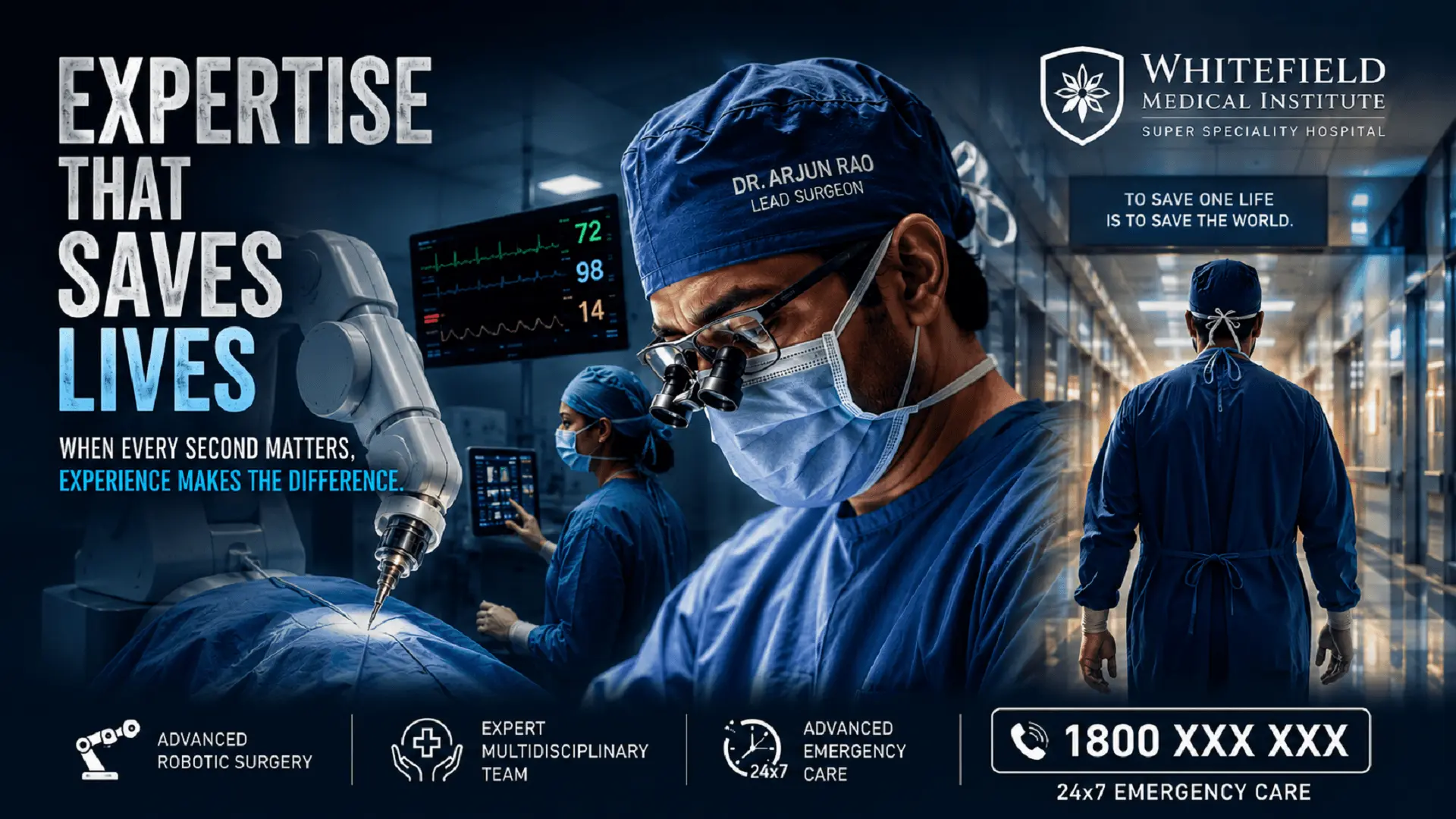
For this concept, medical technology was intentionally framed not as spectacle, but as reassurance. The robotic surgical systems, monitors, and emergency equipment were visually integrated into the story as extensions of calm medical expertise rather than futuristic visual effects. The intention was to communicate:
- Confidence
- Preparedness
- Precision
- Safety
This was achieved without emotionally disconnecting the audience from the human side of care.
Why The Film Begins With Fear
The opening patient-eye sequence was intentionally designed to place the audience emotionally inside vulnerability rather than outside observation. The unstable breathing, reflected emergency light, and shallow visual focus were created to communicate the emotional distortion that often exists during moments of medical uncertainty.
However, the fear was intentionally brief. The film quickly transitions into:
- Calm faces
- Stable pacing
- Controlled movement
- Focused eye contact
This shift creates emotional relief without needing dramatic dialogue. The hospital earns trust visually before it speaks.
Realism Over Artificial Healthcare Aesthetics
One of the strongest creative priorities behind the film was avoiding synthetic healthcare imagery that often feels emotionally disconnected from reality. Many AI-generated medical visuals fail because environments appear too sterile, facial expressions feel artificial, movement lacks human weight, emotional pacing feels exaggerated, and lighting feels visually “perfect” but emotionally empty.
For this project, realism became more important than visual perfection. Special attention was given to:
- Restrained facial behavior
- Realistic eye focus
- Authentic medical posture
- Believable hospital pacing
- Subtle human imperfection
- Emotionally natural reaction timing
The goal was not creating “idealized healthcare visuals,” but believable emotional trust.
Cinematic Direction & Visual Language
The visual language of “The Golden Hour” was built around emotional contrast, allowing the audience to emotionally travel from fear into reassurance without excessive exposition.
Emergency Moments
- Darker contrast
- Unstable rhythm
- Shallow focus
- Red emergency reflections
- Compressed tension
Medical Control
- Calmer framing
- Cooler tones
- Stable movement
- Controlled precision
- Clean visual confidence
Human Connection
- Warmer skin tones
- Softer light falloff
- Intimate framing
- Quieter sound design
- Restrained emotional pacing
Sound Design As Emotional Storytelling
A major part of the emotional realism came from sound restraint. Instead of dramatic orchestral music or emotionally manipulative scoring, the film used:
- Controlled ambient textures
- Breathing rhythm
- Medical monitor pacing
- Silence
- Subtle tonal shifts
The silence before emotional moments became just as important as the sound itself. This restraint helped the film feel more grounded, premium, and emotionally believable.
The Human Hand Moment
One of the most important moments in the film occurs when the patient gently holds the doctor’s gloved hand. The gesture is extremely small, but emotionally, it represents:
- Trust
- Surrender
- Reassurance
- Human connection inside clinical uncertainty
That moment became the emotional center of the film. Not technology. Not infrastructure. Not spectacle. Human reassurance.
AI-Assisted Creative Development
“The Golden Hour” was developed using AI-assisted cinematic production workflows combined with realism-focused visual direction, healthcare environment study, emotional pacing design, and premium commercial storytelling principles.
The intention was never to imitate artificial perfection. The goal was to explore how modern creative technology can support more emotionally grounded and human-centered healthcare storytelling.
The strongest healthcare brands do not simply communicate technology.
They communicate calm. They communicate readiness.
They communicate trust before words become necessary.
That philosophy became the emotional foundation behind “The Golden Hour.”